I Didn’t Know What I Was Walking Into
It was early evening in Fort Kochi. The scent of coconut oil and jasmine drifted through the narrow lanes as I made my way to Cochin Cultural Centre — half curious, half unsure what to expect. I had seen pictures of Kathakali performers online. Dramatic faces. Wild eyes. Towering headdresses. But nothing, absolutely nothing, prepared me for what I was about to experience.
I arrived 45 minutes early on the advice of a local. That decision changed everything.
❝ The makeup alone took over two hours. By the time the performance began, I had already witnessed a miracle. ❞
The Transformation That Begins Before the Show
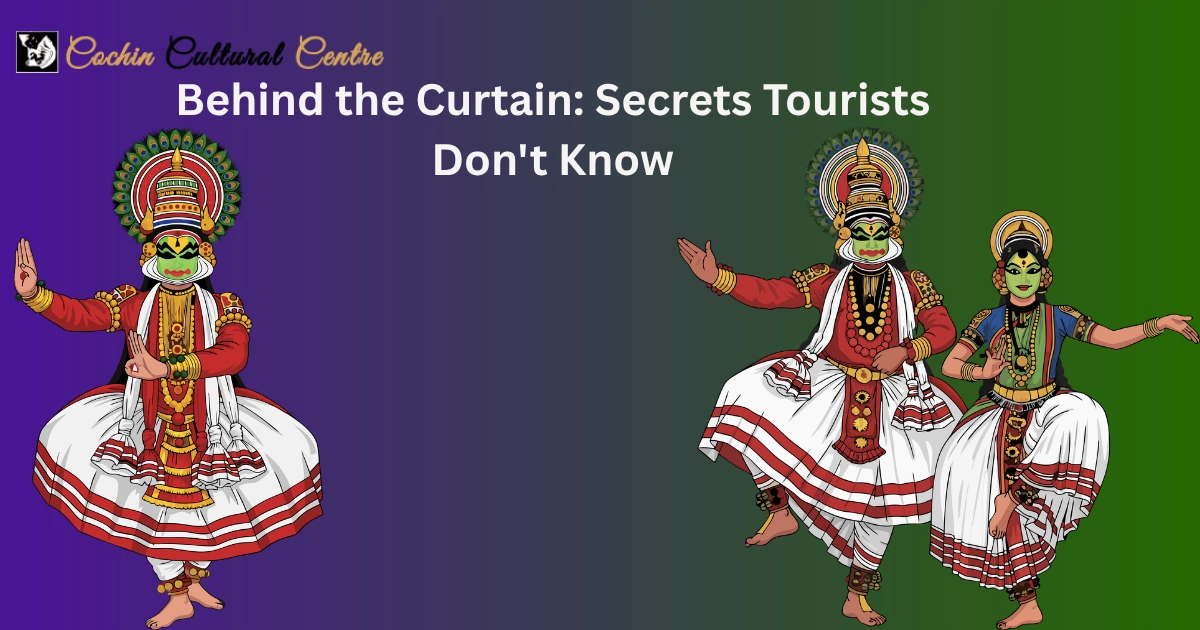
Backstage at Cochin Cultural Centre, the artists were already at work. Seated cross-legged on the floor, one performer was methodically building his face — layer upon layer of rice paste, vivid pigments, and elaborate patterns applied with the tip of a coconut shell. His expression was completely calm, almost meditative, as if the transformation was a prayer.
Green for the noble hero. Black and red for the villain. Orange for the demon king. Every colour, I later learned, is a language that has been spoken on Kerala’s stages for over 500 years. A staff member walked us through each character type before the show began, and suddenly the elaborate paintings made perfect, beautiful sense.
When the Drums Started, Time Stopped
The performance space at Cochin Cultural Centre is intimate and purposeful — not a hotel conference room, not a makeshift stage, but a real cultural theatre where the art is taken seriously. When the traditional Chenda drums and Maddalam percussion thundered to life, the air changed. Something ancient and alive entered the room.
The performer’s eyes moved with a precision that seemed impossible — rolling, widening, narrowing — each movement a word in a physical language older than writing. I did not understand Malayalam. I did not need to. When the hero triumphed and the demon fell, every person in that room felt it.
Why This Belongs on Every Kerala Itinerary
Backwater cruises are beautiful. Spice plantation tours are educational. But Kathakali at Cochin Cultural Centre is the experience that makes Kerala feel truly alive. It connects you — directly and emotionally — to a civilisation that has been telling these stories since the 16th century.
Fort Kochi sets the perfect stage. After the show, I walked along the seafront as the Chinese Fishing Nets swayed in the night breeze. I felt like I had been trusted with something important — a piece of Kerala’s soul. That feeling has never quite left me.
Frequently Asked Questions
Everything visitors want to know before their Kathakali evening.
Q Is Kathakali hard to understand if I have never seen it before?
Not at all. Cochin Cultural Centre always begins with a short introduction explaining the story, the characters, and the key gestures. By the time the performance starts, you already have all the context you need. Visitors with no background in Indian classical arts consistently rate the experience as deeply moving and accessible.
Q How much time should I set aside for the full experience?
Plan for approximately 1.5 to 2 hours in total. The makeup demonstration runs for about 30 to 45 minutes and is itself worth arriving early for. The performance follows and typically lasts 45 minutes to 1 hour. Many visitors also stay briefly after the show to meet the performers and take photographs.
Q What is the best season to attend Kathakali in Kochi?
Performances run throughout the year, so there is no bad time to visit. The most popular window is October through February, when the weather is cool and dry, making it easy to combine the show with exploring Fort Kochi on foot. Even during the monsoon months of June to August, the show continues indoors — and there is something magical about watching Kathakali while the Kerala rain falls outside.
Q Can I bring my children to a Kathakali performance?
Absolutely. Children typically love Kathakali. The vivid face painting, dramatic costumes, and powerful drumming capture young imaginations immediately. Children aged five and above usually enjoy the full show. The backstage makeup session is especially popular with kids — many say it was their favourite memory from all of Kerala.
Q Will I be allowed to take photos or videos?
Yes, photography is welcome during the makeup demonstration and after the performance. During the show itself, we ask guests to keep flash off and minimise camera use out of respect for the performers and fellow audience members. After the curtain, the artists are genuinely happy to pose for photos — the portraits you take will be among the best from your entire trip.
Q Where exactly is Cochin Cultural Centre located and how do I get there?
Cochin Cultural Centre is situated in Fort Kochi, one of the most charming and walkable neighbourhoods in all of South India. From Ernakulam, the journey by auto-rickshaw or taxi takes around 20 to 25 minutes. A wonderful way to plan the evening is to arrive in Fort Kochi by late afternoon, stroll past the famous Chinese Fishing Nets at sunset, have an early dinner at one of the harbour restaurants, and then make your way to the show.
Q Do I need to book tickets in advance?
During the busy tourist season from November to February, advance booking of at least one to two days is strongly recommended as seats fill quickly. During quieter months, walk-in guests are usually welcome. Either way, booking ahead guarantees you a good seat and peace of mind. Tickets are very reasonably priced for the quality of artistry on offer.
Q Is there parking available near the centre?
Fort Kochi’s lanes are best navigated on foot or by auto-rickshaw rather than private car. If you are driving from elsewhere, parking is available at a short walking distance from the centre. Most visitors prefer to hire an auto-rickshaw or taxi for the evening, which also means you can enjoy dinner and the neighbourhood without worrying about the return journey.