Your First Kathakali Show in Kochi: What to Expect, Watch For, and Take Home With You
You’ve landed in Kochi. You’ve walked the narrow lanes of Fort Kochi, watched the Chinese fishing nets, dip into the backwaters at sunset, and eaten fish curry that made you close your eyes. And now someone — your hotel concierge, a fellow traveller, a local — tells you: go see a Kathakali show.
You nod. But quietly, you wonder: what exactly am I walking into?
Here’s everything you need to know before you take your seat.
What Is Kathakali, Really?
Most travel guides describe Kathakali as a “classical dance form from Kerala.” That’s true — but it barely scratches the surface.
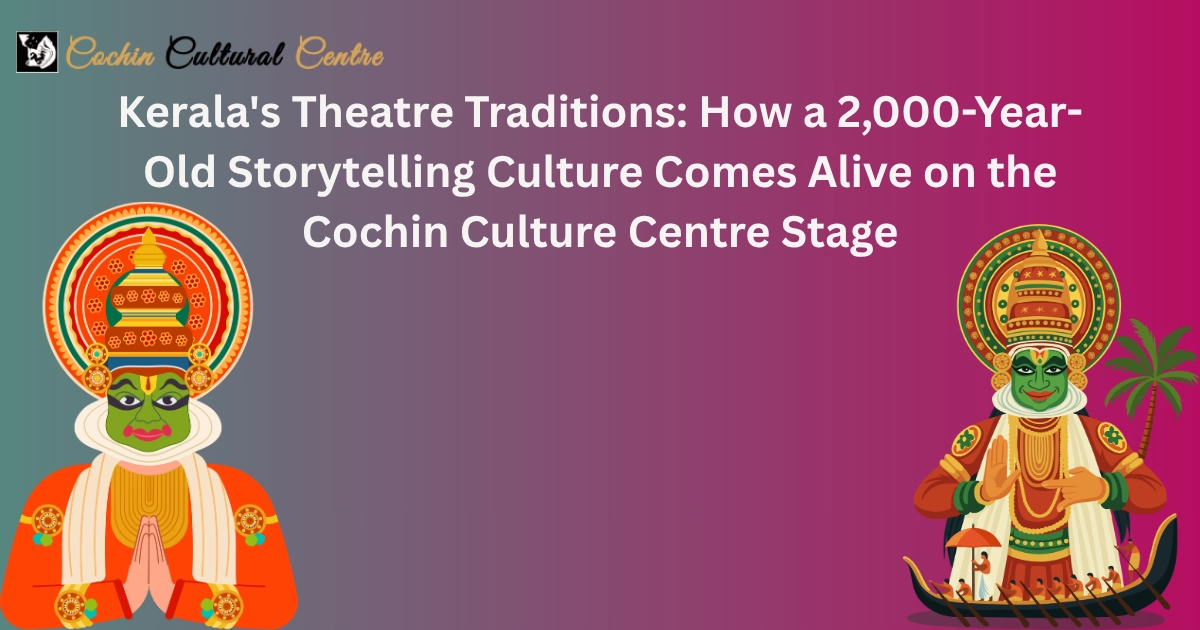
Kathakali is one of India’s oldest and most elaborate performance traditions, born in the royal courts of Kerala over 500 years ago. It is part dance, part theatre, part visual storytelling — and entirely unlike anything you’ve likely seen before. The performers don’t just move to music. They speak through their faces.
Every raised eyebrow, every quiver of the lower lip, every roll of the eye has a precise meaning. There are 24 basic hand gestures (mudras) and nine fundamental emotions (navarasas) — from love and courage to fear and wonder — all expressed without a single spoken word. The entire story lives in the body.
For tourists visiting Kochi, watching a live Kathakali performance is consistently rated among the top cultural experiences in Kerala — and for good reason. It’s the kind of show that stays with you long after you’ve left the city.
Before the Show: The Makeup Ritual
If you arrive early — and you absolutely should — you’ll witness something just as mesmerizing as the performance itself: the Kathakali makeup process.
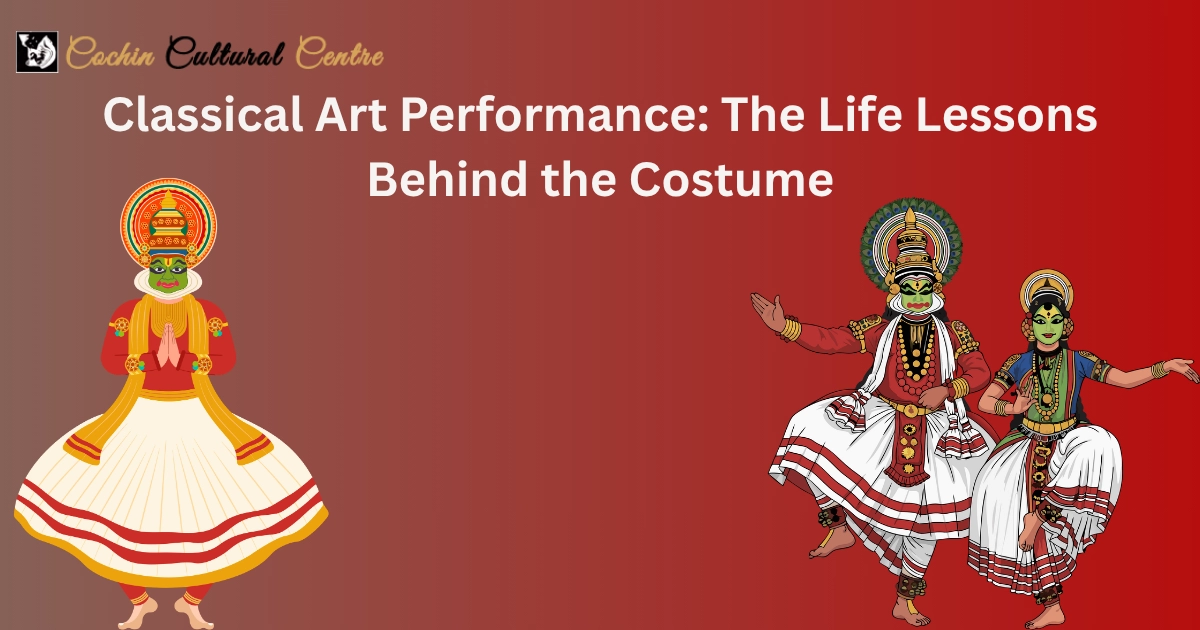
Artists begin applying their elaborate face paint up to three hours before curtain. The colours are not random. Green (paccha) represents noble, heroic characters. Red and black (katti) signals a villain. The intricate white frame built around the face using rice paste and paper — called the chutti — can take over an hour to construct alone.
Watching a performer transform from an ordinary person into a larger than life mythological character is genuinely one of the most unique things to do in Kochi. Many cultural venues, including Cochin Culture Center, open their doors early so audiences can witness this transformation up close.
Pull up a chair. Watch quietly. You’re watching centuries of tradition being applied, layer by layer, to a human face.
During the Show: What to Actually Watch For
First time viewers sometimes feel lost in the opening minutes. The percussion is intense, the movements are stylized, and there’s no dialogue you can follow. Here’s a simple way to stay connected to the story:
Watch the eyes. Kathakali performers train for years specifically to control their eye movements. When the eyes roll dramatically to one side, or flutter in rapid succession, that’s not decoration — it’s conversation. The eyes are telling you exactly what the character feels.
Follow the hands. Even if you don’t know the formal mudra vocabulary, your instincts will often be right. A hand gesture that curves protectively inward usually signals affection. Sharp, outward gestures often mean conflict or power.
Feel the drums. The chenda and maddalam drums don’t just accompany the performance — they drive it. The rhythm shifts tell you when a scene is turning from calm to intense, from joy to danger. Let the music guide your emotional response even when the visual language is new to you.
Most shows at Cochin Culture Centre for visitors in Kochi includes an introduction that explains the story and key characters beforehand. By the time the performance begins, you’ll have more than enough context to follow along.
After the Show: What You’re Actually Taking Home
The costumes, the colours, the drums — those images tend to stay. But visitors who reflect on their Kathakali experience often talk about something deeper: the feeling of having witnessed a living, breathing art form that has survived centuries, intact.
Kathakali wasn’t preserved in a museum. It was kept alive by families of performers, passed from parent to child, refined across generations. When you watch a show at a place like Cochin Culture Center in Fort Kochi, you’re not consuming a tourist product. You’re sitting in the presence of something genuinely ancient.
That’s rare, in any city, in any country.
Plan Your Visit to Cochin Culture Center
Cochin Culture Center hosts regular Kathakali and classical theatre performances designed specifically to welcome first time visitors. Shows are held in an intimate setting in the heart of Fort Kochi, making it one of the most accessible and authentic cultural experiences in Kochi for international travellers.
Pro tips before you go:
Arrive at least 30–40 minutes early to watch the makeup ritual
Sit close — the facial expressions are the performance
Turn your phone to silent, but keep the camera ready for the makeup session
Ask the host before the show if you have questions about the story
Whether you have one night in Kochi or a full week, a Kathakali show at Cochin Culture Center is the kind of experience that reframes everything else you do in the city.
Cochin Culture Center | Fort Kochi, Kerala
Bringing Kerala’s greatest art forms to the world, one performance at a time.